Scoring AI value, feasibility and risk
Most enterprises have a list of AI ideas. Far fewer have a portfolio: a scored, sequenced set of investments with owners and decision gates. The difference determines whether AI spending compounds or fragments.
Insights
Written for enterprise leaders making real choices about AI investment, delivery and governance.
Most enterprises have a list of AI ideas. Far fewer have a portfolio: a scored, sequenced set of investments with owners and decision gates. The difference determines whether AI spending compounds or fragments.
Pilots prove that something works in principle. Production requires an operating model. Six gaps explain most of the distance between a promising demo and a capability the business actually runs on.

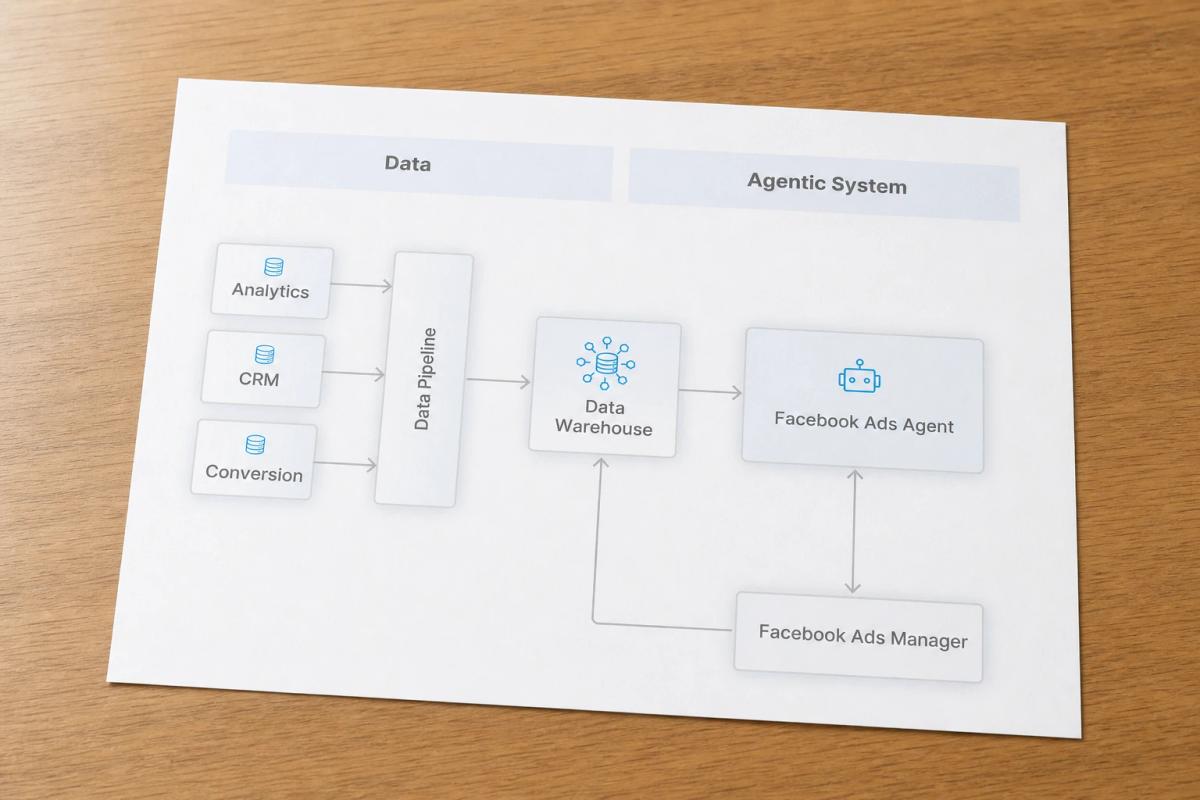
This case study walks through the full lifecycle of a Facebook Ads Agent, from first idea to a fully operational agentic system running in production. The agent is made up of a small team of specialists, a defined set of inputs, a strict list of things it's allowed to touch inside Meta, and a governance layer that keeps its behaviour in check. But the thing that matters most is the data feeding the agent and what business context we give it. If we fail to define a proper business scope for the agent, it will optimise a metric that could hurt the business. For example, if we ask the agent to drive revenue, it might push a product that has a 40% return rate. So if it doesn't have the right scope, it will develop tunnel vision.